

After World War II ended, and it seemed that people would finally be able to breathe out and relax, a new era of global tension began: the Cold War. Once more, the world was split into two factions, one supporting the United States of America, and the other the Union of Soviet Socialist Republics. The conflict affected a wide range of areas, including politics, economy, culture and many more. Learn more at dallas-yes.
The tension between the parties grew and became increasingly dangerous as a result of each party making every effort to outperform the other. The United States and the Soviet Union actively built nuclear weapons and used them as a method of political deterrence.
The Cold War had an impact on the lives of ordinary people as well. They lived in fear of disaster, so they built bomb shelters, stockpiled food and prepared for a probable nuclear war.
Texas’ role in the Cold War
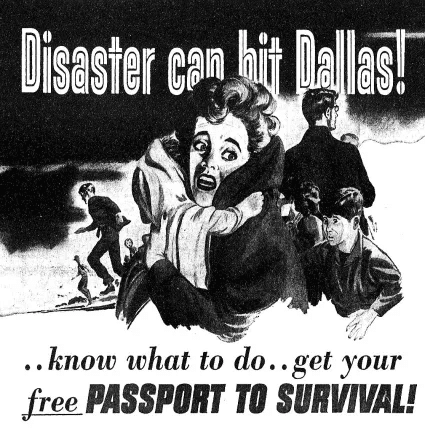
Following World War II, the United States and the USSR, who had been allies in defeating Nazi Germany, started to realize that their relationship was beginning to deteriorate. They held opposing opinions on what postwar Europe and other parts of the world should be like. In this sense, serious conflicts arose between them. The period of these confrontations, which lasted from 1946 to 1991, became known as the Cold War. For nearly five decades, the United States and the Soviet Union have engaged in active military, political and economic conflicts.
Residents of the state of Texas were not indifferent to their country’s fate and participated in the Cold War. Some answered the call of duty by joining the army, while others did everything they could in the rear.
During the Cold War, Texas was home to dozens of Department of Defense facilities, most of which were established during World War II. The list of these facilities included US Air Force bases and stations in Lubbock, Pyote, San Angelo, Eldorado, Del Rio, Laredo, Harlingen, San Antonio, Houston, Waco, Fort Worth, Dallas, Sherman and others. These military sites trained young men and women for service in the United States Army, Air Force, Navy and Coast Guard.
Dallas, in particular, was considered a possible target in the case of a nuclear strike because of the Grand Prairie Armed Forces Reserve Complex located in the area. It was a military aviation hub at the time, as it was home to some of the most important military bases, including Hensley Field and Chance Vought. Due to the concentration of strategic military infrastructure, the city was considered a potential target in the event of a nuclear attack.
The fact that Texas had numerous important military sites led the residents to believe that in the case of a nuclear strike, it would be their cities that were going to be impacted. Therefore, they took certain measures to save lives.
History of construction of a radioactive fallout shelter in Fair Park
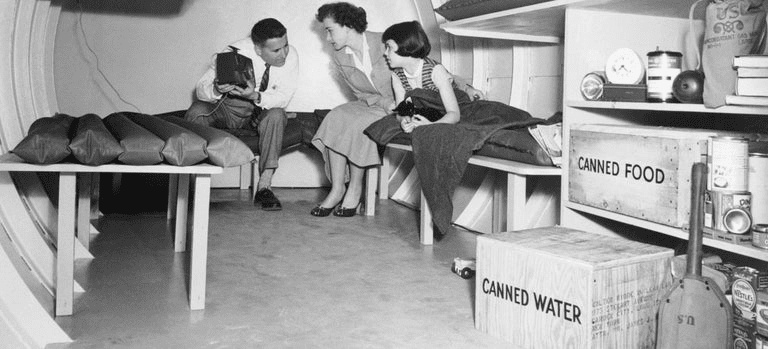
The construction of a nuclear bomb shelter at Dallas Fair Park began in May 1961, just as tensions between the United States and the Soviet Union were at their most strained. The Dallas Civil Defense Emergency Operating Center was chosen as the site, where Science Place II was later opened. According to an article published in the Dallas Times Herald on March 27, 1962, the vault was officially opened on April 1, 1962, at 15:00. Its building cost a total of $120,000. The city authorities funded half of it, while the federal government funded the remainder.
The Fair Park bunker was designed to withstand a 20-megaton bomb even if it was dropped in the center of Dallas (it was assumed that a nuclear strike would hit the city center).
This shelter was literally designed to withstand explosions. It was outfitted with large concrete steel doors that were hermetically secured with a bolt. The outer doors were also made explosion-resistant. In addition, the bunker had a ventilation system with anti-explosion valves that automatically closed to keep the blast wave out. There was a separate filtering room for air purification. It was equipped with a wall of filters to remove pollution from the air coming from the street.
This underground concrete bunker was designed to provide the best shelter against radioactive fallout for local high-ranking government officials. They could live safely inside the vault for at least two weeks because it had a radio, a telephone connection, electricity and a large supply of food and water.
The first public radioactive fallout shelter in Dallas
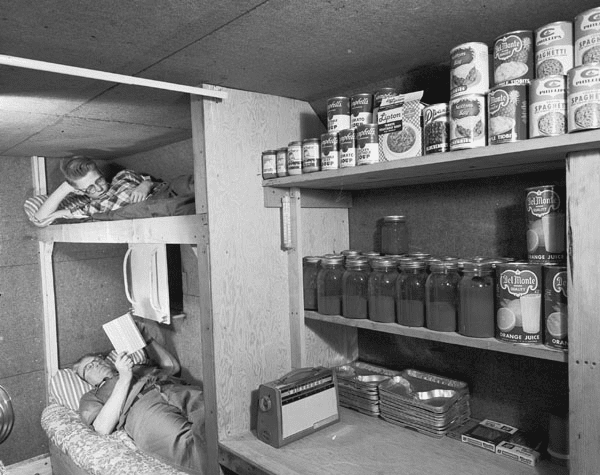
John F. Kennedy was the first to call for the construction of bunkers in the event of a nuclear attack. He realized that reliable bunkers would be required not only by officials but also by ordinary Americans as well. At first, Kennedy urged the public to begin building anti-radiation shelters in their own yards and homes, but it quickly became evident that this was extremely expensive for most of the families. The government also couldn’t afford to construct separate shelters for the entire population.
In October 1961, John F. Kennedy announced the launch of the National Fallout Shelter Survey and Marking Program. As part of this initiative, experts had to identify existing structures that could serve as a shelter for people in the event of a nuclear strike and designate them with black and yellow signs that read “Fallout Shelter”.
The first public anti-radiation shelter in Dallas opened in September 1962, at the Southland Life Insurance Building. Although this place was designated as a shelter in 1954, it was not officially opened until eight years later. In the event of an emergency, it could save 30,000 lives. The first public radioactive fallout shelter had a steady supply of water, food and medical supplies, sufficient for a large number of people.
Other Dallas anti-radiation shelters
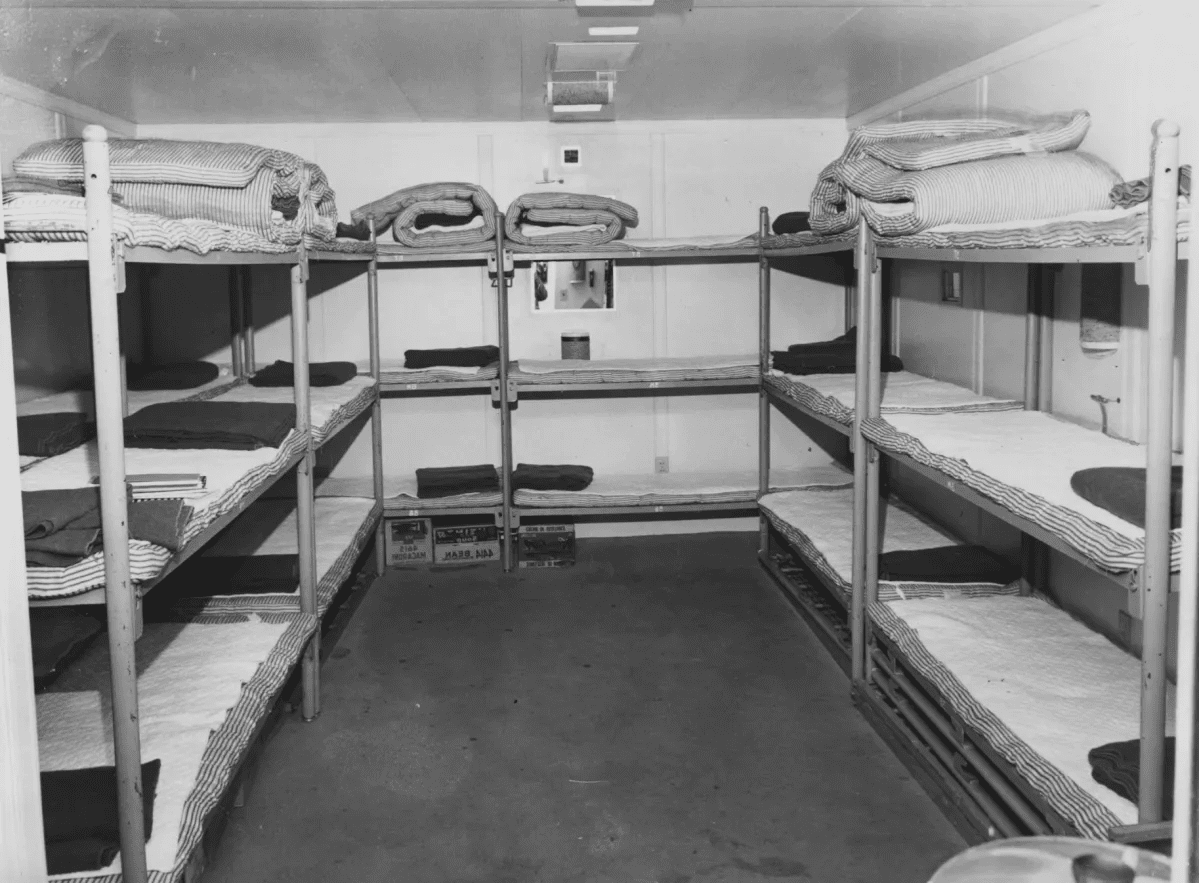
In 1966, more than 300 official shelters were identified in Dallas. According to experts, more than 971,000 people could have been rescued within their walls.
Only 204 of the 323 certified shelters could be utilized as public shelters in the event of radioactive fallout, as their owners had signed agreements with the federal government and city authorities. The majority of these places restocked their drinking water, food and medical supplies on a regular basis. Usually, food such as crackers and candy were brought, along with medical supplies that included only bandages and iodine. In addition, the supplies necessarily included Geiger counters.
As planned, a number of shelters in Dallas were housed in downtown buildings. They also had official Civil Defense signage on their facades.
One of these shelters was the opulent Neiman-Marcus department store. In 1965, the corresponding official signage appeared on its front. This department store was regarded as one of the most elegant bomb shelters in the city. If the townspeople could choose where to hide during a nuclear attack, many would pick Neiman-Marcus. Dallas people assumed that its basement was comfortable, elegantly designed and well-equipped. As a result, individuals who found refuge there will most certainly be offered more than just hard candies and a stack of crackers.