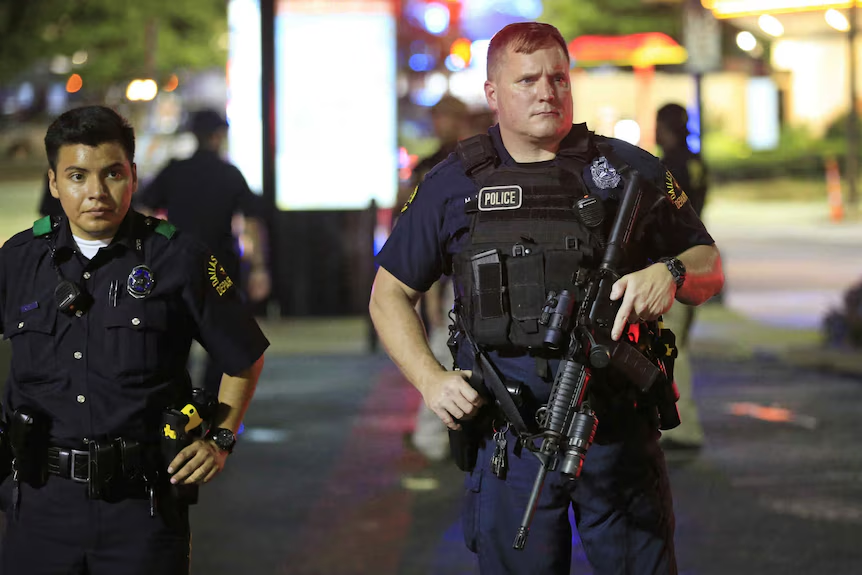

Dallas is one of the largest cities in the United States, known for its strong economy and vast oil reserves. Over the years, the metropolis has witnessed many major events that have shaped the city’s development and affected the lives of its residents. Today, we’ll talk about a tragic event — the 2016 terrorist attack in Dallas. Read more about it on dallas-yes.com.
Five Police Officers Killed
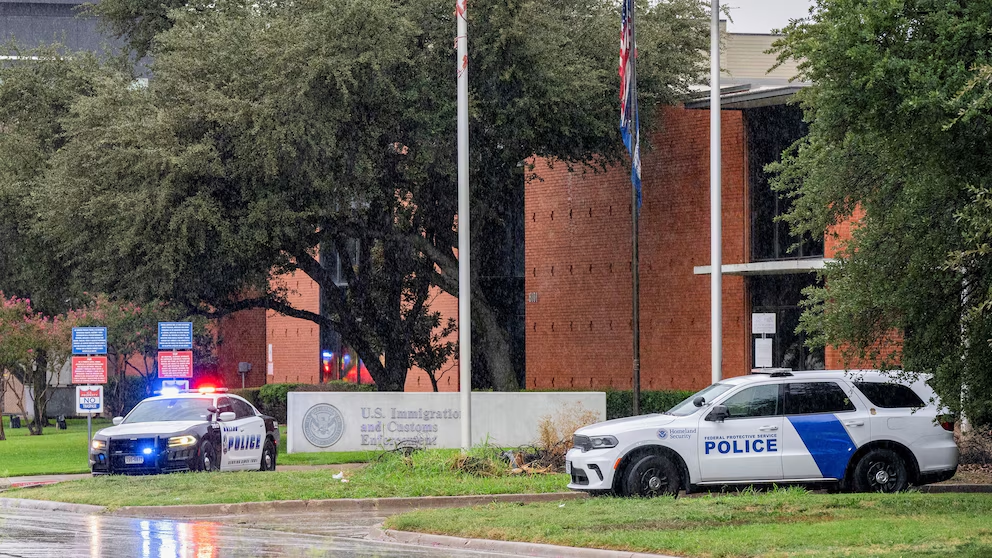
The tragedy occurred on July 7, 2016, during mass demonstrations held in memory of two African Americans — Alton Sterling and Philando Castile — who had been killed by police around the same time.
During the protest, Micah Xavier Johnson, a former U.S. Army veteran who had served in Afghanistan, opened fire on police officers. After the shooting began, the gunman barricaded himself inside a nearby college building. He was later neutralized when law enforcement deployed a remotely controlled MarkV-A1 robot equipped with an explosive device — the first time in U.S. police history that a suspect was killed using this method.
As a result of the attack, five police officers were killed, and eight others were injured, along with two civilians.
Authorities later reported that the assailant had planned a broader attack involving explosives. Despite this, he managed to inflict significant harm on both protesters and law enforcement before being stopped.
The Black Lives Matter Movement Condemned the Violence
It’s important to note that the July 7, 2016, protest was organized by the Black Lives Matter movement, which strongly condemned the violent assault. At the same time, the organization used the tragic incident to further emphasize its mission to fight systemic racism and police brutality.
According to movement activists, violence is unacceptable in any situation. However, the protests and their demands should serve as a wake-up call to society and government officials about the deep-rooted issue of racial injustice. Following the incident, Dallas authorities and police services began exploring ways to reduce tension and build stronger trust between law enforcement and local communities.
This event became a turning point for the United States, highlighting the challenges of race relations, systemic bias, and violence that continue to divide the nation.
Who Were Alton Sterling and Philando Castile?
The July 7 protest in Dallas was sparked by the deaths of Alton Sterling and Philando Castile — two African American men whose killings triggered nationwide outrage.
Alton Sterling was shot and killed on July 5, 2016, in Baton Rouge, Louisiana, during a controversial police encounter that was captured on video. The footage clearly showed officers using excessive force, which led to Sterling’s death.
The very next day, Philando Castile was fatally shot in Minnesota after being pulled over by police during a traffic stop. The confrontation was also recorded on video, further fueling public outrage.
These two tragic incidents, occurring just days apart in different cities, ignited massive protests across the United States, particularly by the Black Lives Matter movement, which stands against police brutality and racial discrimination. Thousands of people took to the streets of Dallas, demanding justice and equal treatment for African Americans. Unfortunately, not all participants were able to control their emotions or actions, leading to chaos and violence.
The Black Lives Matter movement has continued its activism in Dallas, but the 2016 attack became a defining moment for the organization. It forced activists to reconsider their strategies, especially regarding protest methods and collaboration with local authorities and law enforcement.
This remains one of the most tragic chapters in Dallas’s history. We hope this article helped you learn more about your city and its past.