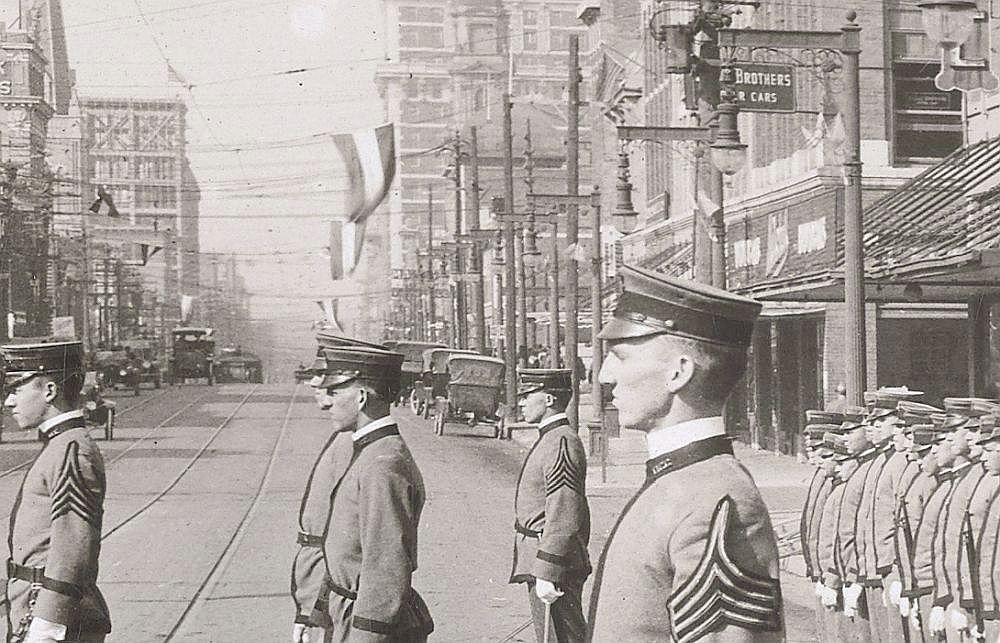

From 1918 until 1919, the then-popular Camp John Dick Aviation Concentration Camp, commonly known as Camp Dick, operated in Dallas, Texas. The camp served as a gathering place for aviation school graduates who had yet to enroll in primary flight schools. In addition, on the grounds of Camp Dick, reserve military pilots were prepared for high school training. Find out more at dallas-yes.
The aviation camp was named after cadet pilot James F. Dick, who was killed on January 6, 1918 in Dallas.
History of Camp John Dick Aviation Concentration Camp
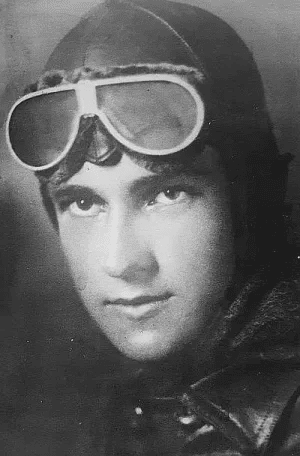
Camp John Dick Aviation Concentration Camp, often known as Camp Dick, was built in Dallas during the peak of the First World War. It opened on January 31, 1918, on the fairgrounds of the Fair Park. First and foremost, this location was chosen because exhibition pavilions, hangars, and warehouses were already installed on the territory of the complex and could be turned into barracks, training rooms, canteens and administrative offices. Furthermore, only Fair Park could boast such an enormous territory that could accommodate a large number of military personnel.
The camp became a training center for aviation school graduates awaiting admission to flight schools, and reserve military pilots were also trained at Camp Dick in preparation for advanced schools.
Some accounts indicate that the aviation camp was named after cadet pilot James F. Dick, who died in Dallas, but little is known for sure.
Another intriguing fact is that during World War I, Camp Dick was referred to as a concentration camp, and only then as a training camp.
Preston Sturges, Camp Dick’s most famous cadet
Preston Sturges was a renowned American screenwriter and director. Many people know him for the films “The Lady Eve” and “Sullivan’s Travels”. He was born in 1899 in Chicago. Sturges spent the greater part of his childhood with his mother in France. Preston’s mother was a typical bohemian woman who married four times, was friends with every artist of the day and even had a romantic relationship with Aleister Crowley.
At the age of 19, Preston Sturges was sent to study in Dallas, namely at Camp John Dick Aviation Concentration Camp. During his short stay at the camp, Preston not only became a part of its history but also committed to memory a lot of important moments.
According to Camp Dick’s most famous cadet, the most pressing issue for all future members of the military was the severe heat wave in Texas. The young men frequently passed out during formations. Additionally, as the command no longer paid attention to such incidents, the cadets were forced to bring each other to their senses with cold water themselves. Preston Sturges and other cadets climbed to the top of one of the attractions on the edge of Fair Park at night to get at least some fresh air.
Sturges spent only a few months at the Dallas aviation camp. Subsequently, he was transferred to Park Field in Millington, Tennessee, and then to the School of Military Aeronautics in Austin. Even after the First World War ended, the man received military training. However, Preston was never meant to be a pilot: after finishing his studies, he decided to help his mother run her business, and then, Sturges went on to become a successful Broadway playwright and relocated to Hollywood. In 1940, the former Camp Dick cadet won the first-ever Academy Award for scripting “The Great McGinty”. After that, Preston Sturges gained recognition as one of Hollywood’s best comedy screenwriters.
A dark page in the history of Camp Dick
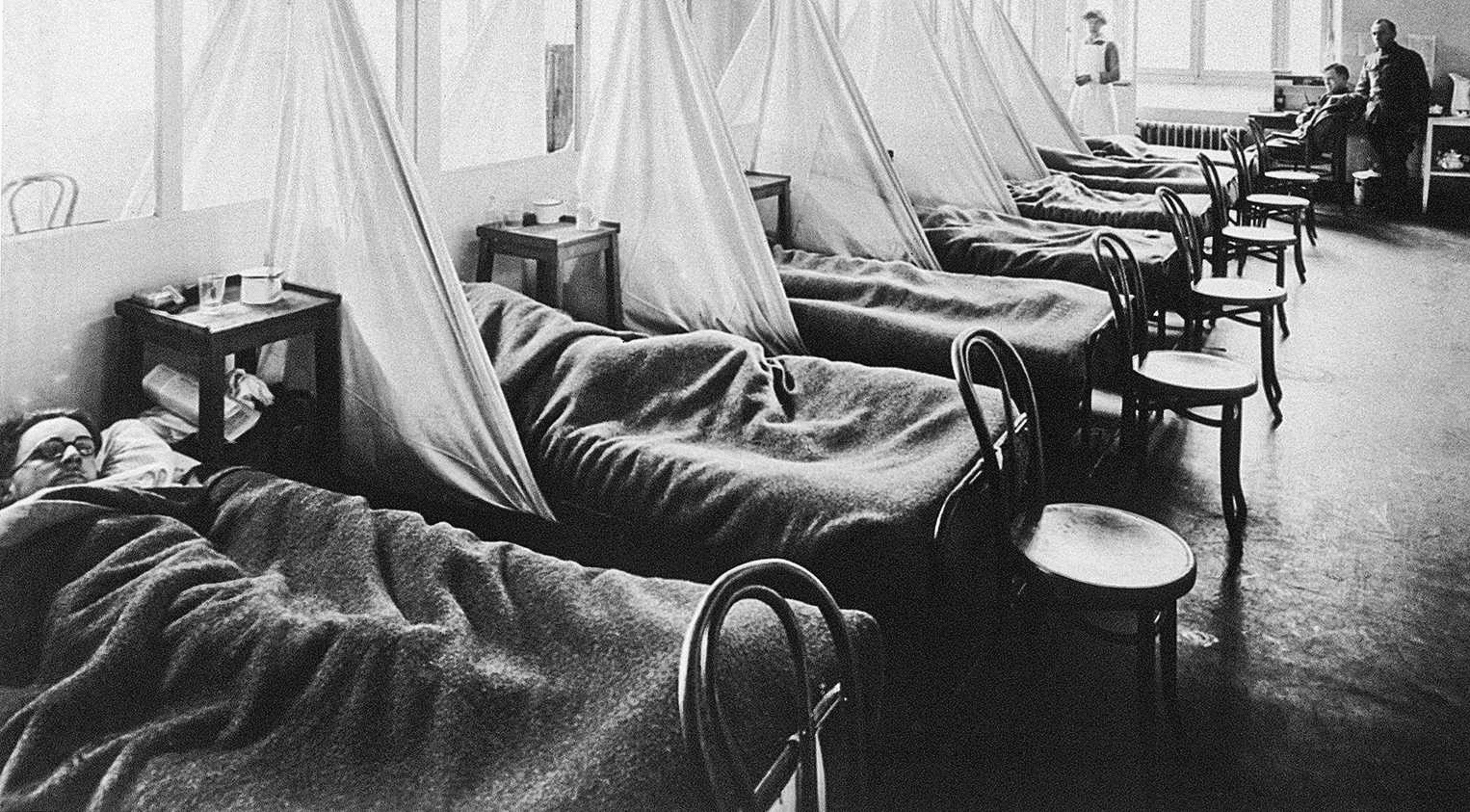
Since Camp John Dick Aviation Concentration Camp only lasted for a year, there were few notable events in the course of its existence. However, when discussing the camp’s darkest times, it is worth recalling that in October 1918, the camp was at the epicenter of the Spanish flu outbreak. Officials called the disease the Spanish flu because they mistakenly assumed that the virus originated in Spain.
Unlike most flu strains, which are usually most complicated in newborns and the elderly, Spanish flu has resulted in the highest fatality rate among healthy young adults aged 20-40. Obviously, such an insidious disease could not fail to affect the future military personnel who stayed at the camp. Especially if this camp was located in a city with a busy railway connection, which contributed to the virus’s quick spread.
In the summer of 1918, camp authorities reported a significant increase in the number of flu cases among cadets. In this regard, St. Paul’s Hospital built 45 tents specifically for patients from Camp Dick. Quarantine precautions were also implemented for the young men who had recently arrived at the camp. Newly incoming cadets were required to undergo a mandatory medical examination and spend several days in isolation before being allowed to join the rest.