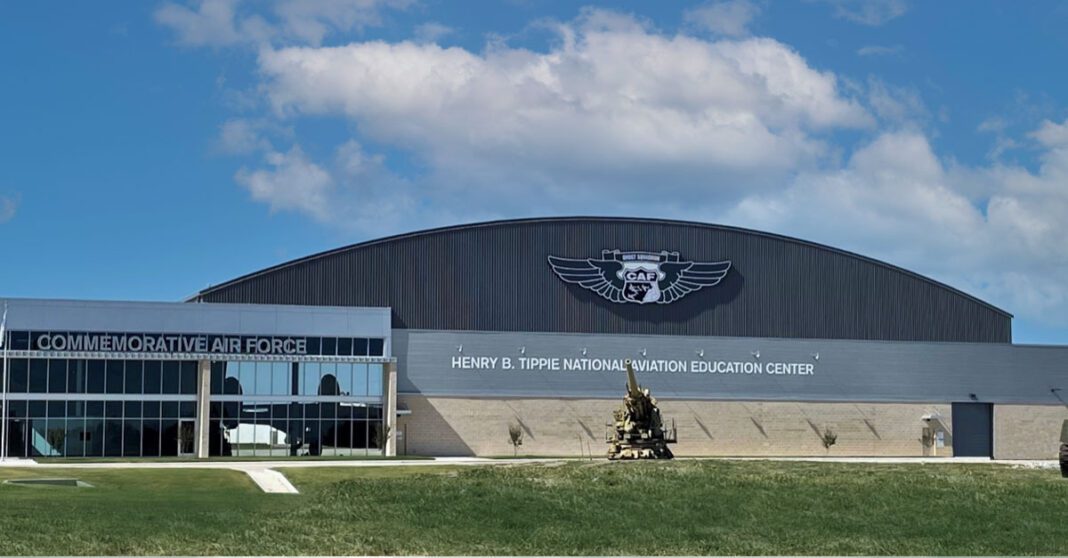

The Henry B. Tippie National Aviation Education Center is often hailed as a one-of-a-kind institution where you can delve deep into the rich history of American aviation. Its story began in 1957 when Lloyd Nolen and a group of fellow veterans decided to purchase a P-51 Mustang. What started as a casual hobby of maintaining the fighter jet soon blossomed into a significant historical endeavor. Their collection grew, and public interest in the exhibits soared. Read on to learn more at dallas-yes.
A Museum Honoring a World War II Veteran
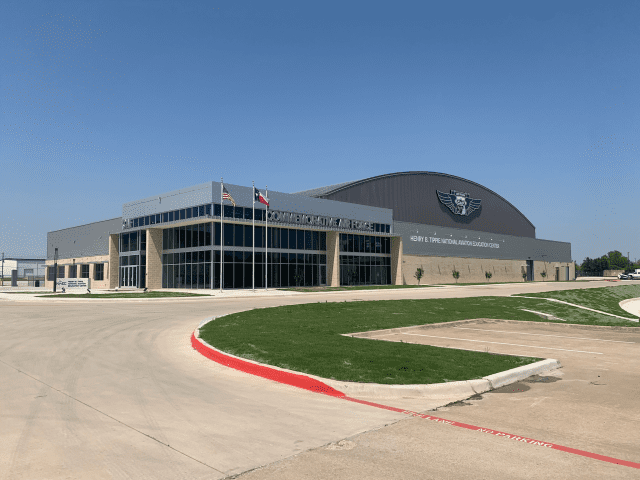
The National Aviation Education Center spans an impressive 47,000 square feet at Dallas Executive Airport. It was named in honor of the late World War II veteran, Henry B. Tippie.
The vision for this educational center came from former United States servicemen, with Lloyd Nolen leading the charge. His comrades who served in the Rio Grande Valley were equally enthusiastic. In 1957, their combined efforts led to the acquisition of a P-51 Mustang fighter, soon followed by several F8F Bearcats.
What began as a hobby soon evolved into something far greater. The veterans’ collection transformed into a vital historical and educational resource, not just for Dallasites and Texans, but for all Americans. The official mission statement of the Henry B. Tippie National Aviation Education Center succinctly captures its purpose: “Honor the Past, Empower the Future.”
The World’s Largest Collection of World War II Aircraft
The Dallas aviation museum stands as the flagship of the American Airpower Heritage Museum, housing the world’s largest collection of World War II aircraft.
Starting in 1960, Nolen’s group of former servicemen embarked on a quest to find wartime aircraft to preserve them for future generations. To their astonishment, they discovered that most of these planes had been decommissioned. By the end of the war, the United States had produced nearly 300,000 aircraft, yet within 15 years, almost all of them had been scrapped. The few remaining units were simply abandoned at air bases, left to deteriorate under the relentless assault of time and weather. Regrettably, neither the U.S. Air Force nor the U.S. Navy made attempts to preserve these historical relics, which had played a crucial role in securing victory.
To safeguard this invaluable aviation heritage, the Commemorative Air Force (CAF) was established as a non-profit organization in Dallas on September 6, 1961. The newly formed organization’s primary goal was to restore and preserve as many aircraft as possible. By the end of 1961, the Commemorative Air Force’s fleet already boasted nine planes.
In 1965, the first museum building, spanning 26,000 square feet, was constructed at Rebel Field. From that point on, the Commemorative Air Force’s fleet steadily grew, adding medium and heavy bombers like the B-29, B-25, B-17, and B-24 to its impressive collection.
Over its years of operation, the Commemorative Air Force has earned a reputation as one of the largest air forces in the world. For modern audiences, it has amassed a stunning collection of 181 aircraft, representing 60 different types of aviation transport. This incredible roster even includes planes from several foreign countries and those that saw action in military conflicts post-World War II.
While the Commemorative Air Force’s headquarters are in Dallas, a significant portion of its members are located in other cities and even other countries.
Exploring War History at the Henry B. Tippie National Aviation Education Center
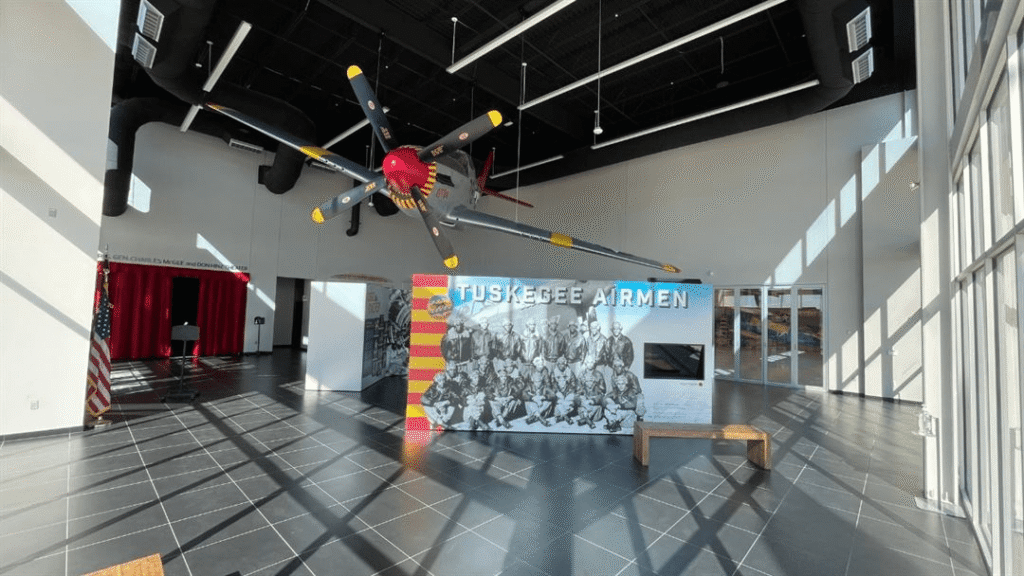
Visitors to the Henry B. Tippie National Aviation Education Center can dive deeper into the events of World War II through five captivating stories:
- Texas’s Role in Allied Victory
- Women Airforce Service Pilots (WASP), America’s first female military aviators
- The “Aztec Eagles,” a Mexican fighter squadron
- The “Tuskegee Airmen,” America’s first Black military pilots
- Rosie the Riveter, or the women who worked in manufacturing to support America’s war efforts
Each narrative about this period is complemented by relevant photographs and exhibits, immersing visitors in the atmosphere of those years.
Additionally, the James C. Ray Education Wing is located within the aviation museum. It’s a popular destination for schoolchildren and students eager to learn more about World War II history. Here, they can attend lectures from historians and even participate in workshops.
Among the many aircraft inside the National Aviation Education Center are several exceptionally valuable exhibits: the B-29 Superfortress and Diamond Lil, as well as the B-24 Liberator. These planes require meticulous attention and maintenance, so the museum provides dedicated space for their restoration. Visitors can observe the restoration process firsthand while simultaneously learning more about aviation.
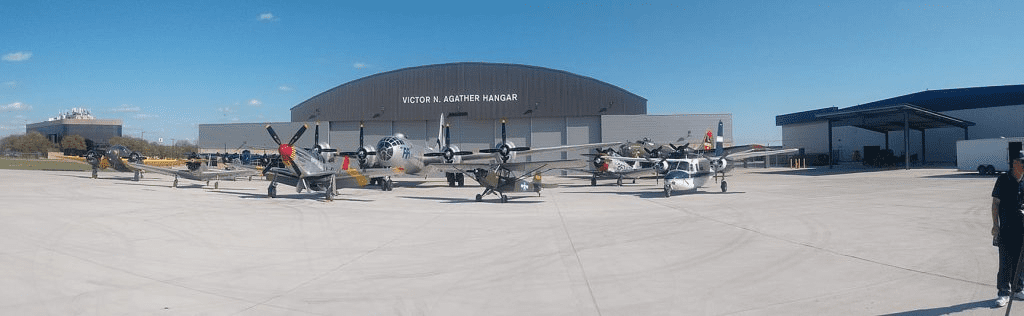
And, of course, a major highlight for visitors is always the outdoor exhibit. The open-air display of aircraft offers an immersive experience of the World War II era that’s just as powerful as the theoretical historical narratives.
Educational Programs at the Center
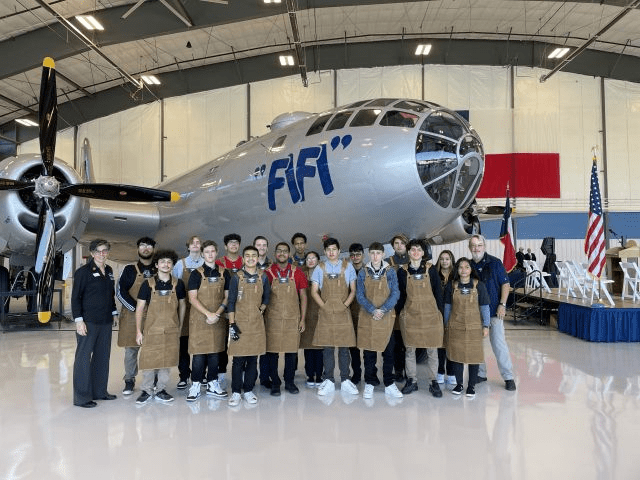
For many talented individuals, a visit to the Henry B. Tippie National Aviation Education Center isn’t just a one-day affair. With several distinct educational programs available, there’s truly something for everyone.
One of the center’s flagship programs is the summer camp, Camp SOAR. This week-long camp is open to schoolchildren, typically students in grades 4-7. For younger enthusiasts interested in learning about United States aviation, there’s the “A is for Aerospace” program, designed for preschoolers to introduce them to the fundamentals of the aerospace industry.
Other popular educational programs at the Henry B. Tippie National Aviation Education Center include Home Front and Build Guild.
Local college students also frequently choose this institution for internships, especially those whose majors are related to aviation or allied disciplines. Students typically send their resumes and letters of interest to the center and then await an invitation.
The Henry B. Tippie National Aviation Education Center also hosts professional development sessions for teachers. Accredited by the Texas Education Agency, the center frequently welcomes educators from various disciplines, including physics and history.
The Henry B. Tippie National Aviation Education Center stands as a unique hub, seamlessly blending the memory of World War II events with modern educational opportunities for all generations. The center preserves the historical legacy of American aviation, teaches contemporary audiences to value the heroic deeds of their ancestors, and inspires them to achieve great things in the future. In essence, it continues to fulfill its core mission, articulated back in the 1960s.