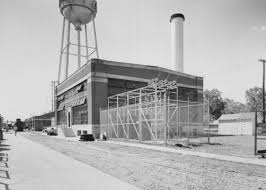

The Ford Motor Company stands out as a prime example of industrial mobilization during World War II. By shifting its Dallas operations to wartime production, this major enterprise significantly aided the United States in supporting its allies. What’s more, this reorientation helped ensure plenty of jobs and stable wages for Dallas residents even after the war concluded. Learn more at dallas-yes.
A Brief History of Ford’s Dallas Operations
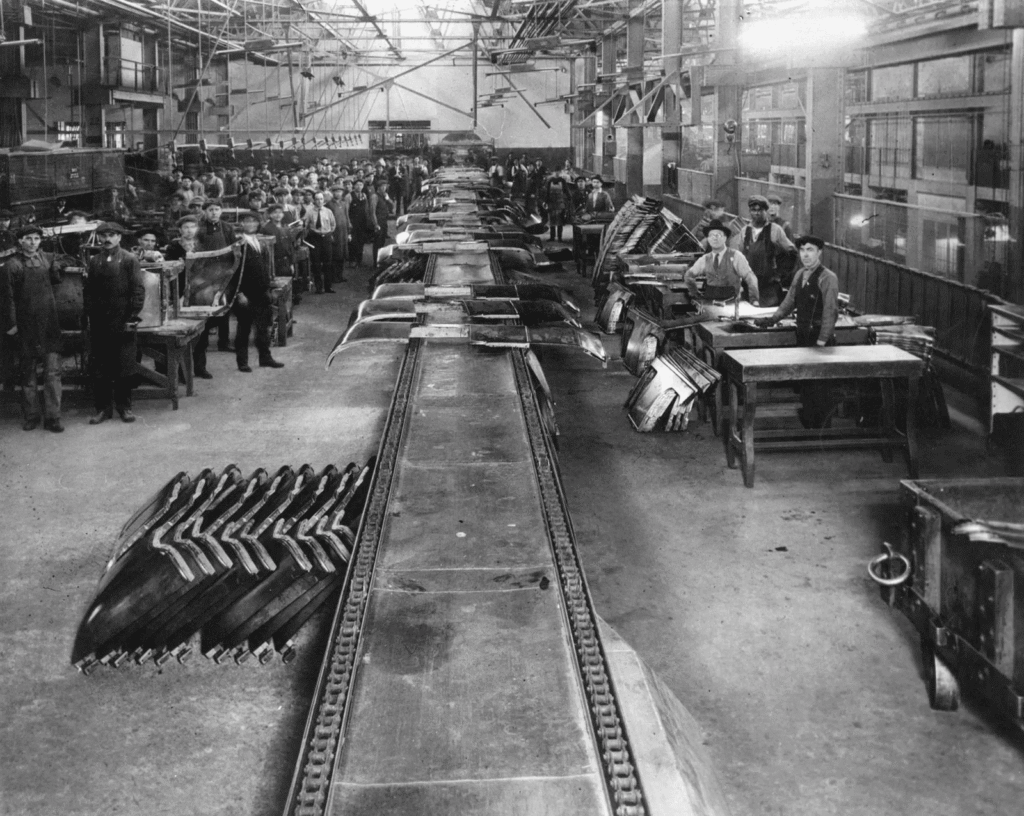
Understanding the Ford Motor Company’s journey before World War II is crucial. It reveals a consistently successful factory, with few exceptions, even during the nation’s toughest times.
The city’s first Ford assembly plant opened its doors in 1914 at 2700 Commerce Street. Today, many know this location as the building that houses Adam Hats. Due to rapid growth, the plant moved to a new home at 5200 E. Grand Avenue in Dallas Fair Park by 1925. This new Ford Motor Company site was a significant upgrade, offering ample space, a large construction yard, and direct access to railway connections.
During this era, Dallas was a prominent manufacturing hub, primarily focused on oil extraction, banking, cotton, and textiles. However, Ford Motor Company was the sole automotive manufacturer in the city, with no significant competitors in other Texas cities either. Ford vehicles leaving the plant proudly bore the inscription “Built in Texas by Texans,” reflecting the deep civic pride they inspired.
Thanks to its robust economy, Dallas was among the last cities to feel the impact of the Great Depression. Until 1931, the crisis barely touched the lives of its residents. However, once Ford Motor Company halted Model T production, Chevrolet, GM, and Chrysler began to dominate the American market.
Although Ford continued to release new models in the late 1920s and throughout the 1930s, the company was forced to lay off thousands of workers. From 1933 to 1934, the Ford Motor Company’s Dallas plant even shut down completely.
Ford Motor Company’s Transition to War Production
Henry Ford, the founder of Ford Motor Company, was known for his pacifist views and strong opposition to war. He believed wars were the result of greedy financiers seeking profit from human suffering. In 1939, he even claimed that German U-boat torpedo attacks on American merchant ships were part of a conspiracy orchestrated by these financiers, whom he held responsible for inciting war.
These beliefs explain why, at the outset of World War II, Ford Motor Company initially refused to participate in military production. However, after the United States entered the war in December 1941, Ford Motor Company became a vital supplier of military equipment for the Allies.
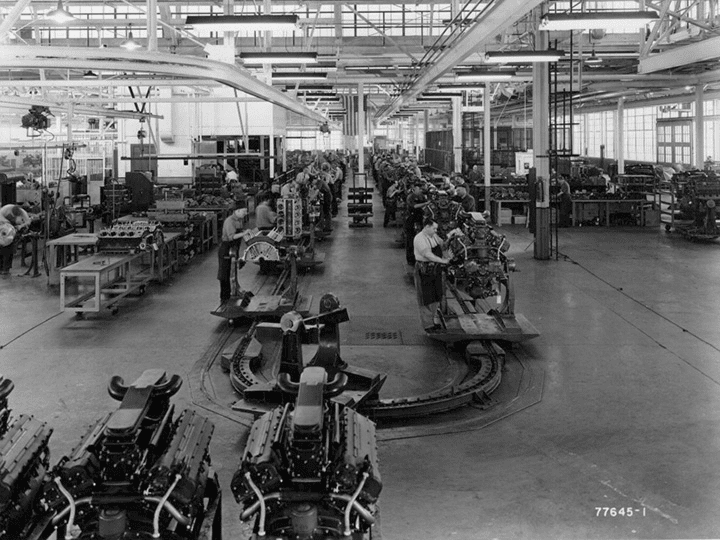
In February 1941, the company fully shifted its operations to military manufacturing. The Dallas assembly plant actively began producing military Jeeps, G8T, and GT8A trucks. By the end of World War II, the plant had manufactured over 93,000 Jeeps and more than 6,100 trucks. Other Ford plants were busy building aircraft, bombers, armored tanks, generators, and more.
Undoubtedly, this company played a pivotal role during World War II. In 1944, Ford was awarded the “Distinguished Service Medal” by the American Legion for its support of programs for disabled veterans.
Women on the Homefront: Working at Ford During WWII
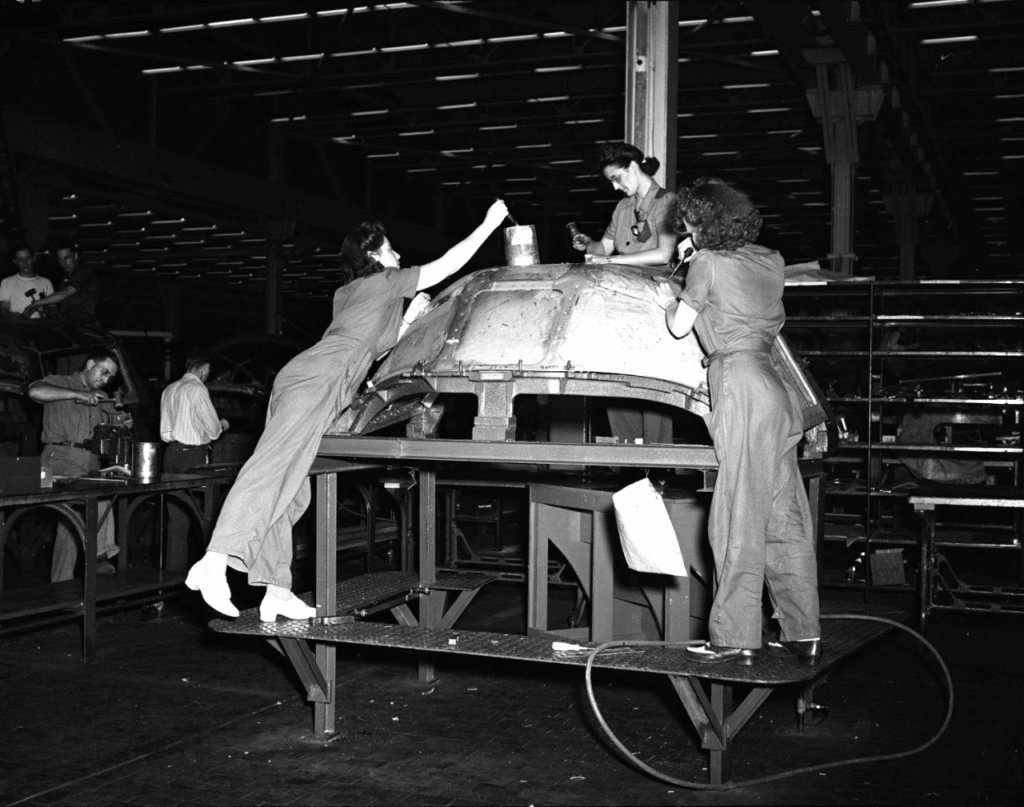
During World War II, women stepped up to fill roles traditionally held by men who were away fighting. They took on jobs in construction, agriculture, and even at military production plants, and the Dallas Ford plant was no exception.
Women comprised approximately one-third of the workforce at the Ford Motor Company during the war. These women did everything from clerical work in offices to riveting and welding on the assembly line. The labor shortage made the city’s women indispensable to the war industry, leading the government to actively recruit them into the workforce.
Women were given opportunities to gain the necessary skills for manufacturing jobs. Once employed at the plant, they received additional support, and their workplaces and conditions were adapted to their needs. However, due to a lack of adequate safety measures, many women frequently suffered injuries, quickly became exhausted, and often struggled to perform the required volume of work properly.
Return to Pre-War Production
After the Allied victory over Germany in July 1945, but before the war with Japan concluded, the Ford plant in Dallas resumed its normal production. Returning to civilian vehicle manufacturing, the company’s first offering was the 1946 model. It was nearly identical to the model whose production had ceased due to the start of World War II.
- https://cityofdallaspreservation.wordpress.com/2018/12/07/the-history-of-ford-motor-company-in-dallas/#:~:text=In%20February%201942%2C%20Ford%20converted,the%20end%20of%20the%20war.
- https://cityofdallaspreservation.wordpress.com/2018/12/07/the-history-of-ford-motor-company-in-dallas/#:~:text=In%20February%201942%2C%20Ford%20converted,the%20end%20of%20the%20war.
- https://cityofdallaspreservation.wordpress.com/category/dallas-during-wwi-ii/