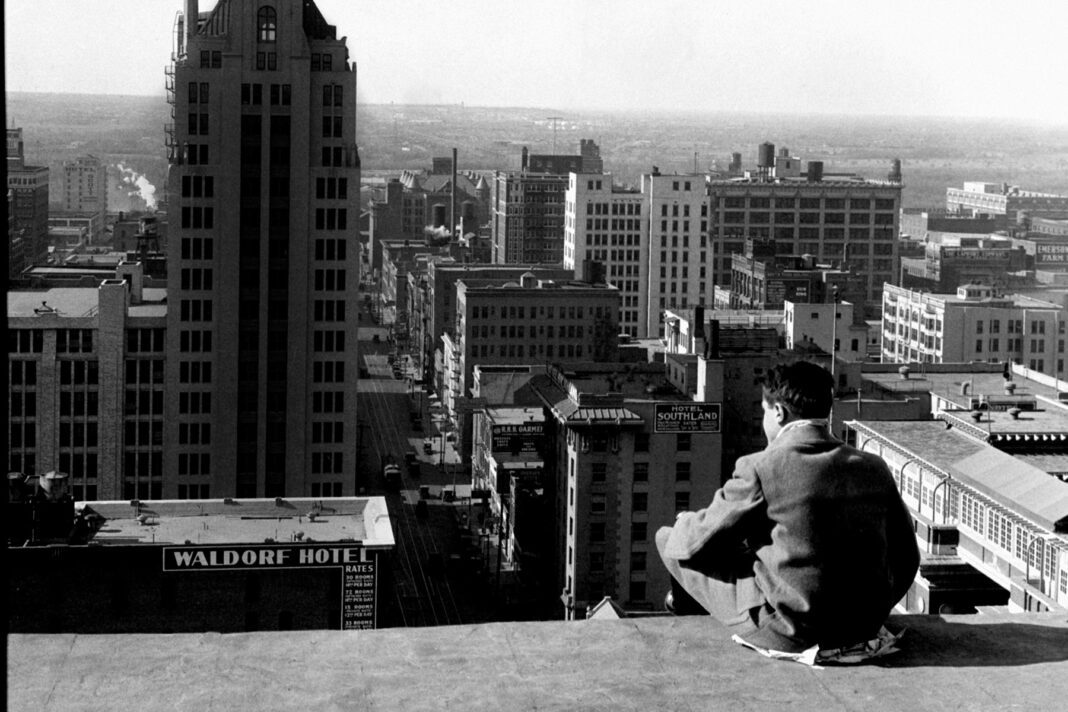

Dallas has transformed from a small trading post along the Trinity River into one of the most influential cities in the United States. Its rapid growth began in the late 19th century when the railroad arrived, turning Dallas into a regional hub for trade and agriculture. The city’s rise was further cemented by the establishment of headquarters for major Texas oil companies. Dive deeper into Dallas’s fascinating history below. Find out more at dallas-yes.
Laying the Foundation
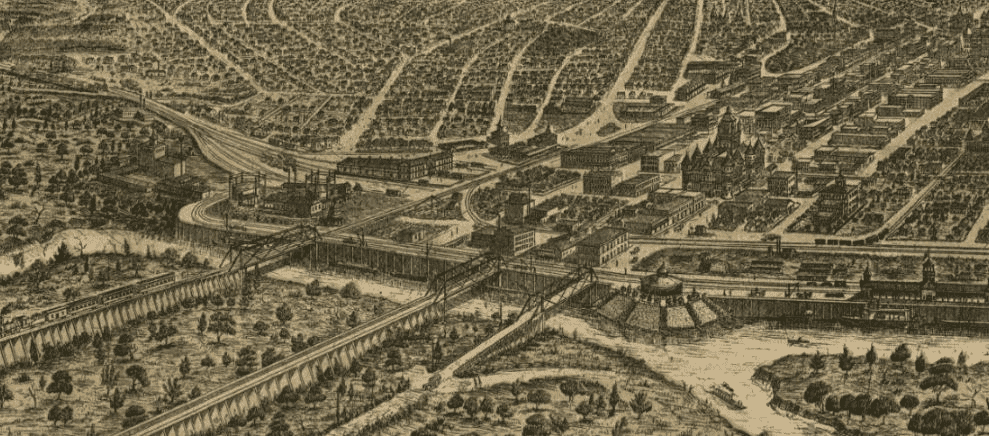
In November 1841, Dallas was founded by John Neely Bryan, who settled on the east bank of the Trinity River. He chose a natural ford, a convenient spot for trade and a prime crossing point for old Native American trails, making it the best ferry location for miles around.
Unbeknownst to Bryan, the Texan Land and Emigration Company had already granted these lands to St. Louis, then led by William Peters. However, Bryan eventually legalized his claim, and thanks to the Peters Colony, the first settlers began to arrive in the region.
In 1844, J.P. Dumas officially laid out the newly formed town, dividing Dallas into blocks and streets. The origin of the city’s name remains a mystery to this day, with several theories among historians. It might have been named after U.S. Vice President George Dallas, his naval commander brother Alexander Dallas, or even one of the early settlers, Joseph Dallas.
When Dallas County was established in 1846, the city temporarily served as its administrative center. In 1850, residents voted to make this status permanent. By 1856, Dallas officially became a city, with Samuel B. Prior as its first mayor.
The Railroad Arrives
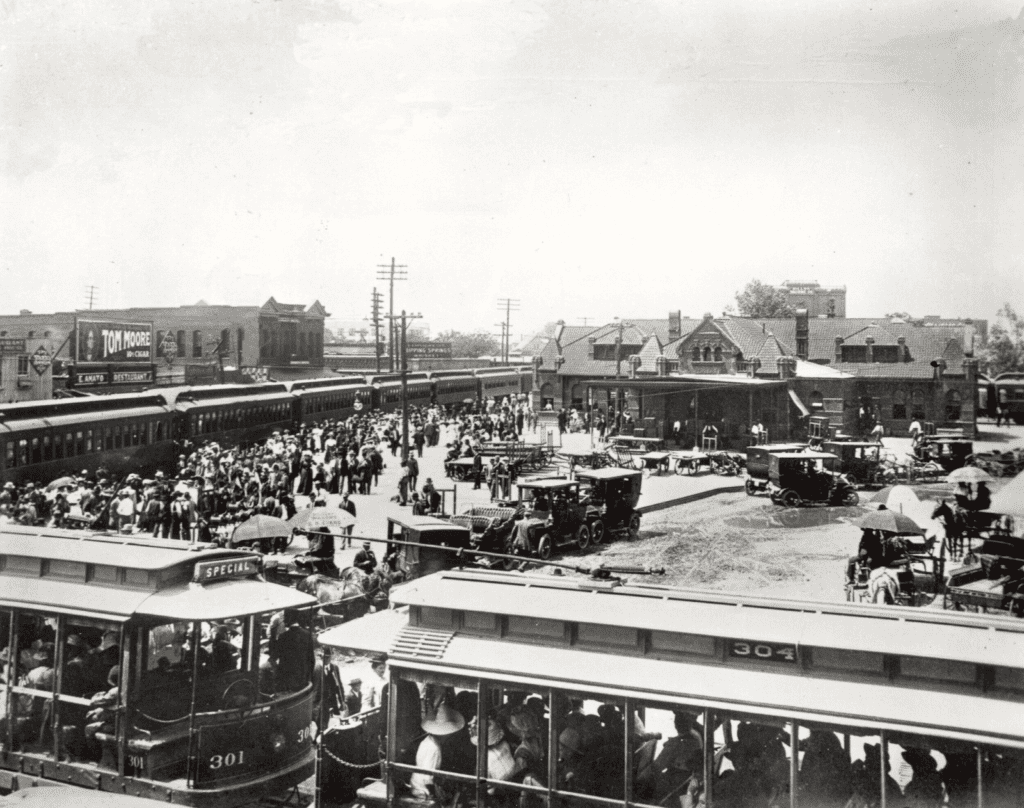
Access to efficient transportation has always been a catalyst for urban development, and Dallas was no exception.
Initially, locals heavily relied on the Trinity River for various types of transportation. However, this option proved inconvenient for many. Dallas entrepreneurs decided to tackle this issue head-on. Between 1872 and 1873, two major railway lines, the Houston and Texas Central and the Texas and Pacific, were brought in to lay tracks through the city.
Dallas’s strategic location helped it become a pivotal hub for transporting local goods north and east to major factories. Cotton emerged as the region’s primary crop, with its main market located on Elm Street in Dallas. Additionally, Dallas became a global center for trading leather and buffalo hides. Merchants who set up shops along the railroad eventually settled in the city, growing their businesses there.
By 1880, the city’s population had more than tripled, reaching 10,385 residents.
Banking and Beyond
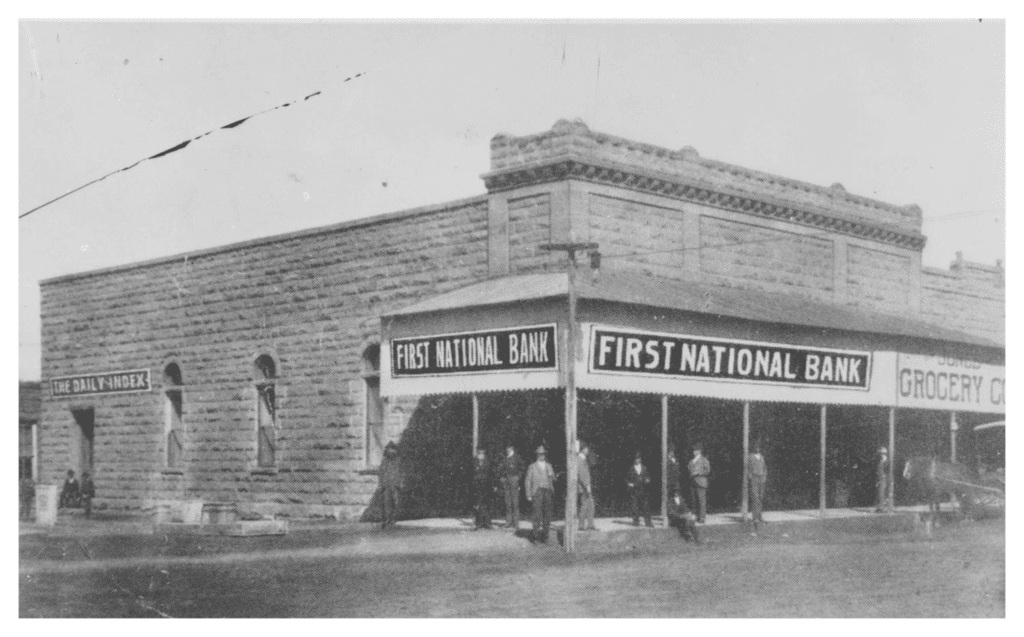
By the late 19th century, banking and insurance became some of the most vital industries in Dallas. Influential figures like William Henry Gaston, William L. Cabell, and J.T. Trezevant left their mark on the city’s history through their contributions to these sectors. These forward-thinking businessmen were keen on fostering the city’s growth. They spearheaded the State Fair of Texas, organized a board of trade, founded a mercantile exchange, and more. Each initiative aimed at cultivating a thriving business environment in Dallas.
In 1881, telephones arrived in Dallas, followed by electricity in 1882. This period also saw the launch of several daily newspapers, with The Dallas Morning News (1885) and The Dallas Times Herald (1888) becoming the largest.
However, the path wasn’t always smooth. Three years after annexing the neighboring city of East Dallas and following a national financial crisis, five banks and several industrial enterprises went bankrupt. Cotton prices plummeted to less than five cents a pound, and only 62 new manufacturing businesses were established in the city during the 1890s. The crisis also impacted the budding labor union movement. In 1899, the American Federation of Labor granted the city a Trades Assembly charter. Key goals of this assembly included implementing an eight-hour workday and prohibiting the dismissal of union members.
Dallas: A Leader in Texas’s Oil Industry
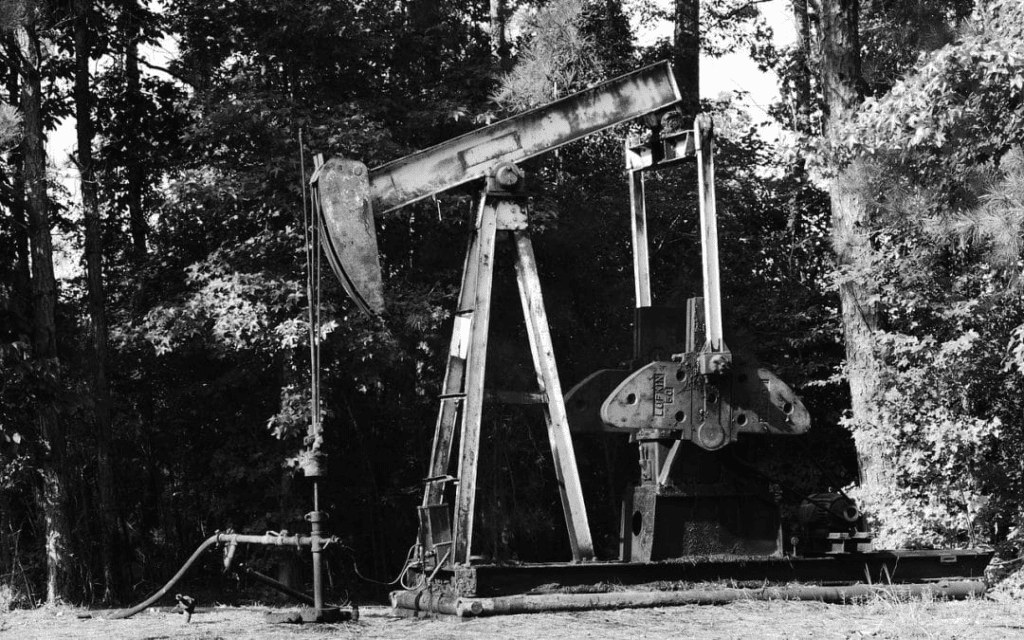
Despite the onset of the Great Depression, the oil industry in Dallas began to flourish in the 1930s.
In 1930, Columbus Marion Joiner discovered oil 100 miles east of Dallas in Kilgore, sparking the East Texas oil boom—a major part of the broader Texas oil boom.
Dallas quickly became the financial epicenter for the oil industries of Texas and Oklahoma. By early 1931, dozens of oil and gas companies either relocated to Dallas or were founded there. Banks started issuing loans for oilfield development, solidifying Dallas’s role as the financial hub for all oilfields in the Panhandle, Permian Basin, East Texas, the Gulf Coast, and Oklahoma.
For a time, these events overshadowed the concerns of the Great Depression. However, by mid-1931, falling prices and overproduction negatively impacted the city’s economy, leaving over 18,000 Dallasites jobless. Before the New Deal policies took effect, many residents were literally working for food.
Dallas’s Rise as an Industrial Hub
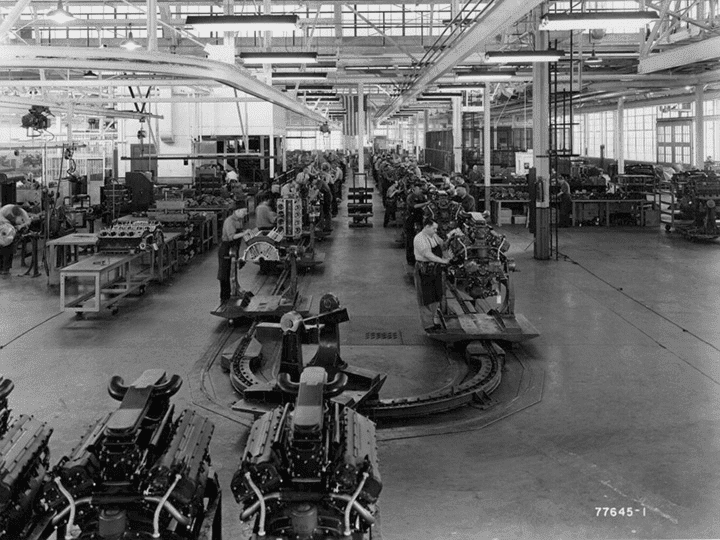
Before World War II, Dallas was considered a minor manufacturing center in the United States. Its three leading industries were food processing, clothing manufacturing, and printing and publishing. During the war, as new enterprises like North American Aviation emerged, the number of jobs soared to 75,000. In 1945, the city experienced a massive economic boom, reminiscent of the one after the railroad’s arrival. Dallas saw five new businesses open daily and 13 new factories each month.
This economic surge led to significant population growth. The number of people eager to move to a city with stable employment skyrocketed. By 1950, Dallas’s population topped 430,000. In the 1950s and 1960s, the city became one of the top four technology centers in the U.S., with companies like Texas Instruments significantly boosting the economy.
Furthermore, in 1957, local entrepreneurs Trammell Crow and John M. Stemmons opened a massive wholesale trade complex for furniture, now known as the Dallas Market Center. This complex is considered the world’s largest wholesale merchandise mart, offering everything for home and personal use. This project marked a significant step forward for the city’s improvement.
A Multicultural Melting Pot
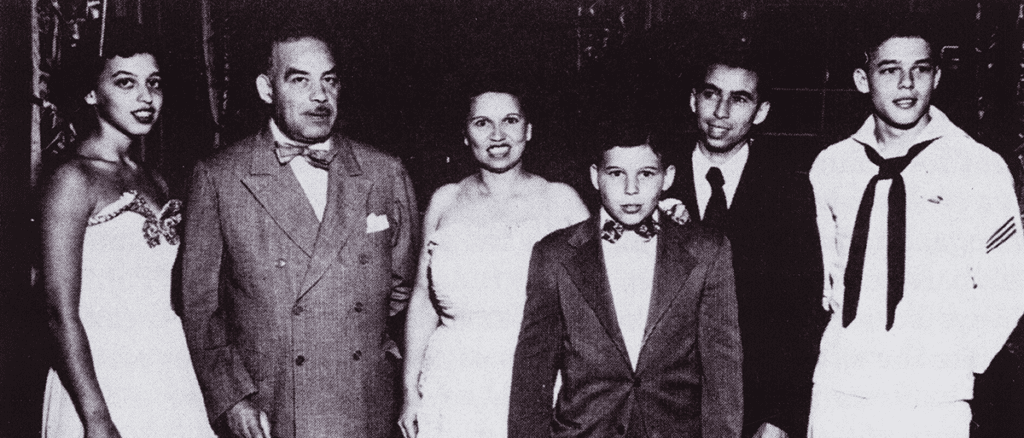
Thanks to all these developments, Dallas’s population significantly increased: from 679,684 in 1960 to 844,401 in 1970. Between 1980 and 1990, it grew by another 100,000 residents. This growth was accompanied by a rise in the city’s ethnic diversity. According to the 1990 census, the population was 47.67% White Americans, 28.88% African Americans, 20.88% Hispanic, 2.18% Asian, and 0.48% Native American.
Sources:
https://www.visitdallas.com/explore/dallas-history/#:~:text=Dallas%27%20History,center%20for%20commerce%20and%20agriculture.
https://www.tshaonline.org/handbook/entries/dallas-tx
https://www.britannica.com/place/Dallas