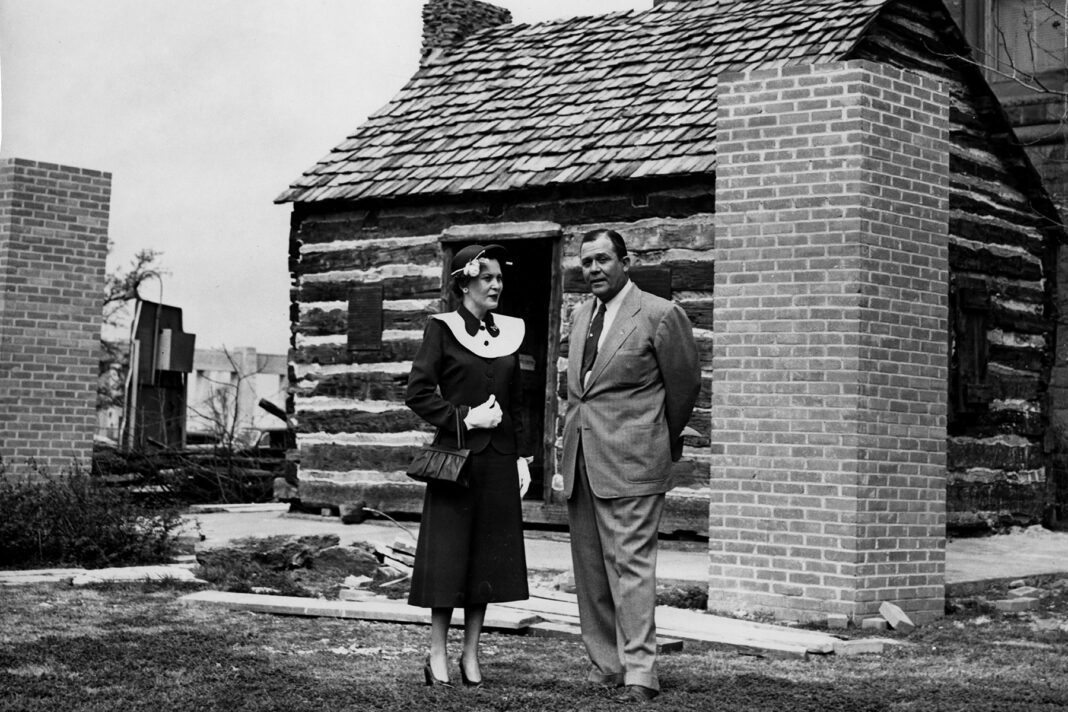

In 1841, farmer and merchant John Neely Bryan, a native of Tennessee, founded Dallas. The development process began with the building of a modest hut, which was the first and, for a time, the only one on the banks of the Trinity River. However, almost immediately, dozens of settlers began to set up their homes in the new territory. Thanks to them, by the end of the century, the settlement had transformed into a regional trading and agricultural center with the potential of becoming a major city. Find out more at dallas-yes.
The first people on the banks of the Trinity River
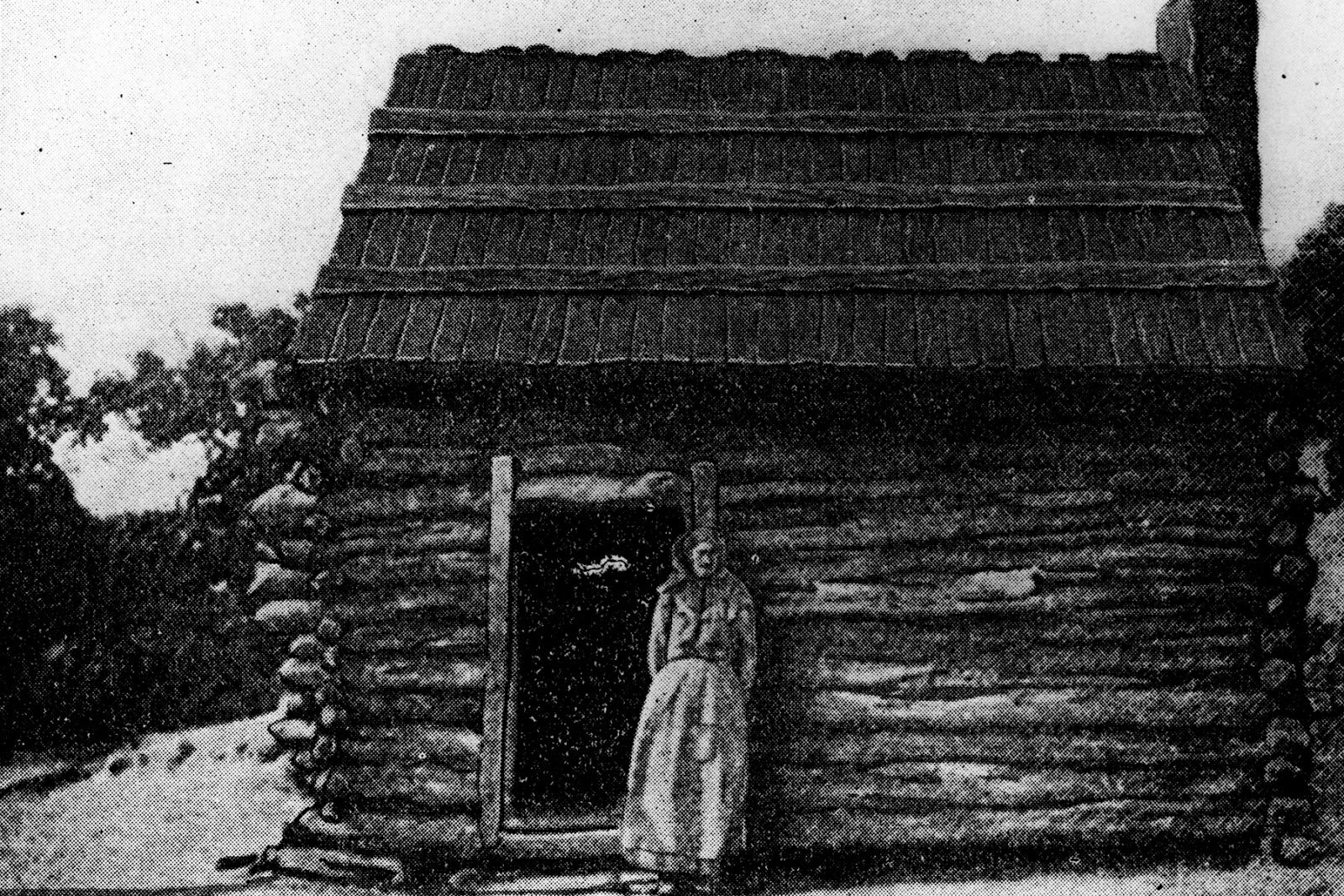
By profession, John Neely Bryan was a lawyer. Prior to moving to Texas, he acquired a legal license and worked as a merchant in Arkansas. However, the possibility of building something large-scale, such as a city, appealed to him far more than other career prospects. As a result, in the early 1830s, he started traveling throughout the state in search of an area where he could open at least a retail location. The man found a suitable spot, but the US government beat him to it by negotiating an agreement with the indigenous people of the territories. It so occurred that John Neely Bryan had no choice but to begin construction right away.
The area where the man settled had previously been used by several Indian tribes, including the Shawnee and Creek. John decided to start construction on a high cliff above where the river was shallow. He told a few other families that settled nearby about his initiative. They eagerly agreed to move. In those years, changes were soon to occur in the personal life of the founder of Dallas. John Neely Bryan married Margaret Beeman, and they had six children.
By 1849, Bryan had already established many stores, a post office and the first river ferry. However, the years of the gold rush prompted him to travel to California. He gave part of his land to the district court, where the first administrative buildings were soon built. Despite his lack of success in California, the man returned to Texas in 1853 and became a delegate to the state’s Democratic Congress.
In 1856, the state legislature officially granted the territory city status.
Origin of the city’s name
John Neely Bryan never made any official comments concerning where the name Dallas originated. However, one of his acquaintances, Frank Cockrell, claimed that Bryan repeatedly stated that the city was named after his dear friend.
There is a lot of speculation in society regarding who exactly this Dallas was. Frank Cockrell believed that the city was named after George Mifflin Dallas, the Vice President of the United States of America. However, there is no proof that John Neely Bryan was even familiar with George Dallas. The vice president showed no interest in the city that appeared on the eastern bank of the Trinity River. It wasn’t until 1844 that he mentioned Dallas in a letter to a Mississippi senator. However, it only happened in passing.
Among other assumptions concerning the person after whom the city was named, you can find the following individuals:
- Naval commander Alexander James Dallas, brother of George Dallas. He was a commodore based in the Gulf of Mexico.
- Military man Walter Dallas who fought at San Jacinto. In fact, his family owned land in the surrounding area.
- Texas hunter James Dallas, brother of Walter Dallas.
A lot of information about the founding of the city and the origins of its name can be found within the walls of the Dallas Public Library and the city municipal archive. However, there is no information that is clearly reliable. In this matter, some handwritten memoirs or statements from John Neely Bryan would have been extremely helpful, but his fate turned out to be such that he was unable to leave any records behind.
The tragic fate of the founder of Dallas
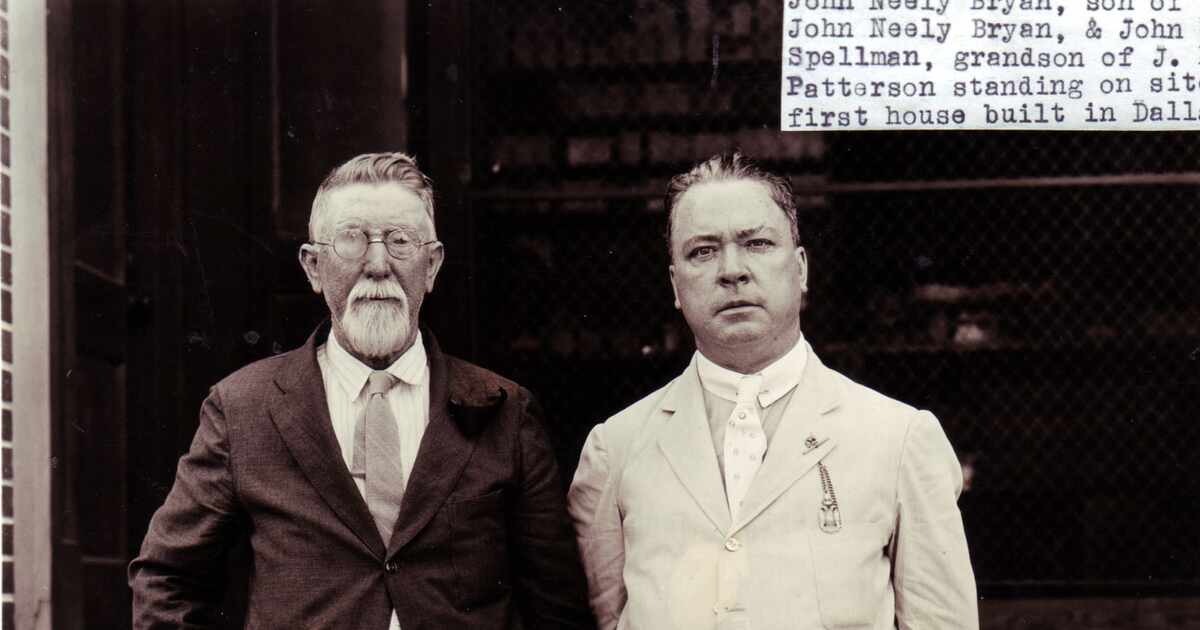
The best and happiest years of John Neely Bryan’s life occurred while he was just starting to develop a new city. His subsequent fate was quite tragic.
In the 1860s, the Dallas founder began drinking excessively. Alcohol caused permanent changes in his body, affecting his life. After shooting a stranger in defense of his wife, he was forced to sell his land in Texas. At first, Bryan fled to one of the Oklahoma cities and then joined the army during the Civil War. However, in 1862, he was dismissed due to his senior age and poor health.
When John Bryan returned to Dallas to live with his family, he tried everything he could to get back into the old rhythm of life. More than anything else, he desired to reestablish himself as a wealthy and powerful figure with societal influence. However, it was impossible to go back in time, and vain hopes caused John Neely Bryan’s mental state to worsen quickly. In 1877, a hearing in the case of the founder of Dallas took place, where his son Edward testified. According to him, the father lost all understanding of what was going on around him and, as a result, was no longer responsible for his actions. Numerous witnesses reported that Bryan acted strangely, burning the bed and clothes, attempting to break through the walls and constantly running from someone.
John Neely Bryan spent his final years in Austin’s state mental hospital. Doctors diagnosed him with a rather dreadful diagnosis: dementia. Even in this state, the man insisted that the city he built should keep the name Dallas because it honored his close friend. John died in February 1877. Some claim he was buried in an unmarked grave at the city cemetery, while others believe he was buried in a cemetery in Texas.
A replica of the first house in Dallas, now a historical landmark
The original hut that John Neely Bryan built for himself on the banks of the Trinity River in the early 1840s was destroyed by flooding. A small one-room replica of the house was restored to serve as a reminder of the city’s history. It is located about a quarter-mile from the original Dallas founder’s home. Contemporaries will also find it convenient to visit the historical monument because it is positioned near famous sites almost in the very center of the city. The reproduction of Dallas’ first house is situated within walking distance of the Dallas Holocaust and Human Rights Museum, the Sixth Floor Museum at Dealey Plaza and the Old Red Courthouse. Exploring John Neely Bryan’s house takes very little time since you cannot walk inside, and it appears to be extremely modest and simple from the outside.
Tourists and locals who are interested in historical events frequently visit this historical site. Local museums and historical societies offer guided tours. They regularly gather those who wish to visit the house and offer not only the opportunity to learn more about Dallas’ history but also to have a pleasant and productive time. Since all architectural structures of that time had distinct characteristics, even such a small example of a historical building may be important. For example, the house is frequently visited by experts who specialize in the restoration of old structures. Moreover, the site is very interesting to the general public. This allows them to understand more about the lives of the people who lived on their land many years ago.